


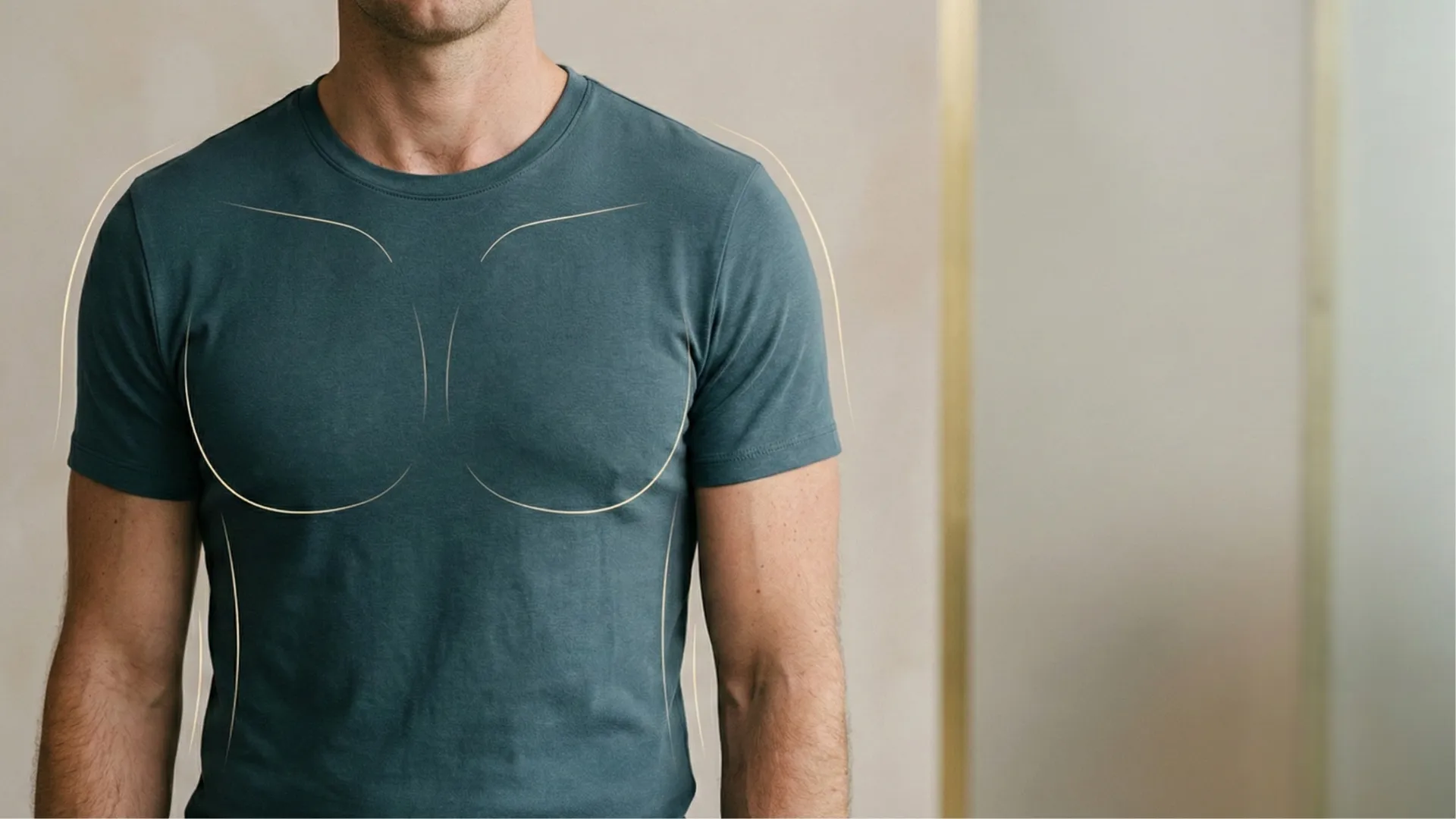
Gynäkomastie
Auf einen Blick
Ein kurzer Überblick darüber, wie sich Ihr Besuch anfühlt — von der Zeit in der Klinik über die Genesung bis hin zum Komfort und wie lange die Ergebnisse anhalten. Alles, was Sie brauchen, um Ihren Tag mit Zuversicht zu planen.
.webp)
1—2 Stunden
.webp)
Entlassung am selben Tag (ambulant)
.webp)
Vollnarkose oder Lokalanästhesie + Sedierung
.webp)
Rückkehr zur Arbeit: 3–5 Tage. Tragen des Kompressionskorsetts: 3–4 Wochen
.webp)
Permanent (erforderlich, das Gewicht wird beibehalten)

- Sie haben vergrößerte männliche Brüste, die zu sozialer Verlegenheit führen.
- Sie haben Empfindlichkeit oder Schmerzen im Brustgewebe.
- Ihr Zustand hat über die Pubertät (Adoleszenz) hinaus Bestand gehabt.
- Sie haben ernste hormonelle Störungen bei einem Endokrinologen ausgeschlossen.
- Du willst eine flachere, maskulinere Brustkontur.
- „Es ist nur Fett, das ich durch eine Diät loswerden kann.“ → Falsch. Beruht die Vergrößerung auf Drüsengewebe (echter Gynäkomastie), lässt sie sich weder durch Diät noch durch Bewegung beseitigen; das Gewebe muss operativ entfernt werden.
- „Das betrifft nur übergewichtige Männer.“ → Falsch. Auch schlanke Männer können aufgrund hormoneller Faktoren vergrößerte Brustdrüsen haben.
- „Die Narben sind sehr auffällig.“ → Falsch. In den meisten Fällen liegen die Schnitte am Rand des Warzenhofs oder bestehen aus winzigen Zugängen für die Fettabsaugung und sind daher kaum sichtbar.
Lassen Sie uns noch heute Ihren Behandlungsplan erstellen
Wir sind hier, um Ihre Fragen zu beantworten und Ihnen die am besten geeigneten ästhetischen Lösungen anzubieten. Lassen Sie uns Ihren Prozess planen, entweder persönlich oder im Rahmen einer Online-Beratung.
Kostenlose Beratung und Analyse
Personalisierte chirurgische Roadmap
Mehrsprachiger Patientensupport rund um die Uhr
Reibungslose Reise- und Unterkunftsarrangements
Natürlich aussehende Ergebnisse und hohe Zufriedenheit



Starten Sie Ihre kostenlose Beratung
Thank you for your submission!
Was ist Gynäkomastie?
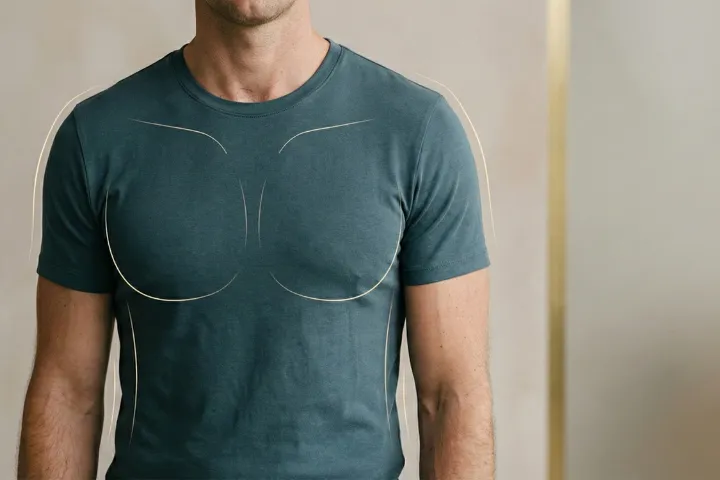
Die Gynäkomastie muss an der männlichen Brust größer als normal sein. Es kann das soziale Leben der Person beeinflussen, je nachdem, welche Erscheinungsstörung es verursacht. Obwohl es in der Regel zu keinen anderen Beschwerden als dem Aussehen kommt, können bei einigen Patienten auch Beschwerden wie Empfindlichkeit oder erhöhte Empfindlichkeit auftreten.
Warum tritt die Gynäkomastie auf?
Die Störungen der Essgewohnheiten können bei Männern zu einer Brustvergrößerung führen, indem sie zu einer abnormalen Schmierung der Brust führen. Einige hormonelle Störungen oder die Einnahme von Medikamenten können zu einer Vergrößerung der Brustdrüse führen, ohne dass das Fettgewebe zunimmt. Bei übergewichtigen Menschen kann es zu einer Zunahme der Fettansammlung in den Brüsten und zu Veränderungen des Hormonprofils der Person kommen. Aus diesem Grund wird die Gynäkomastie bei einem signifikanten Anteil der übergewichtigen Männer beobachtet.
Die physiologische Gynäkomastie tritt in der Neugeborenenzeit, im Jugendalter und im Alter auf. Bei etwa 60% der neugeborenen Jungen liegt eine Gynäkomastie vor, die auf das mütterliche Östrogen zurückzuführen ist. Abhängig von der Menge des während der Pubertät ausgeschütteten Östrogens kann die Gynäkomastie bei 50-60% der Männer beobachtet werden. Es wird normalerweise erwartet, dass es innerhalb von 1-2 Jahren von selbst verschwindet. Während die Gynäkomastie bei etwa 30-60% der Männer mittleren Alters beobachtet werden kann, steigt diese Rate in den 70er Jahren noch weiter an.

Was sollte getan werden?
Es sollte untersucht werden, ob bei jeder Patientin, die sich mit der Gynäkomastie bewirbt, einige riskante Grunderkrankungen vorliegen. Zunächst wird bei der körperlichen Untersuchung überprüft, ob eine Masse vorhanden ist, die Wachstum verursacht. Bei Bedarf erfolgt eine genauere Untersuchung durch den Brust-Ultraschall. Zusätzlich zu den Bewertungen kann nach Meinung eines Endokrinologen überprüft werden, ob eine Hormonstörung vorliegt. Nach einer Gesamtbeurteilung gilt die Patientin mit der Gynäkomastie als Kandidat für die Operation.
Wie behandelt man die Gynäkomastie?
In leichten Fällen und bei Vorhandensein der Brustgröße, die nur vom Fettgewebe abhängt, kann das überschüssige Fettgewebe durch die Fettabsaugung entfernt werden.
In fortgeschritteneren Fällen werden die verbleibenden Reste des Brustgewebes durch die Fettabsaugung entfernt.
In fortgeschrittenen Fällen wird das Brustgewebe chirurgisch mit einer offenen Technik entfernt. Es wird ein halbkreisförmiger Hautschnitt in der unteren Hälfte des braunen Bereichs um die Brustwarze verwendet.
Bei Patienten mit überschüssiger Haut sollte die überschüssige Haut zusätzlich zur offenen Technik entfernt werden. Dies kann zu zusätzlichen Stichnarben führen.
Form neu definieren. Wiederherstellung des Vertrauens.
Von ästhetischer Verbesserung bis hin zu rekonstruktiver Exzellenz.
Spezialisierte Verfahren
Kombiniert fortschrittliche medizinische Techniken mit einem künstlerischen Ansatz, um natürliche, dauerhafte Ergebnisse zu erzielen.














Ein klarer, schrittweiser Prozess, der Sicherheit, Verständnis und persönliche Betreuung in jeder Phase gewährleistet.
Ihre ästhetische Reise
.webp)
Erster Kontakt
.webp)
Anreise & Ankunft

Medizinische Vorbereitung
.webp)
Operation und Genesung

Pflege nach der Operation
.webp)
Lebenslange Unterstützung
%402x.svg)
%402x.svg)
Haben Sie eine Frage?
Die Bedürfnisse jedes Patienten sind einzigartig. Teilen Sie uns Ihre Ziele mit und wir beraten Sie persönlich.
Das sagen unsere Patienten
Erfahrungen, die Patienten über ihre Versorgung, Kommunikation und den gesamten Behandlungsverlauf über Google Reviews teilen.

.svg)
.svg)
.svg)
.svg)
