


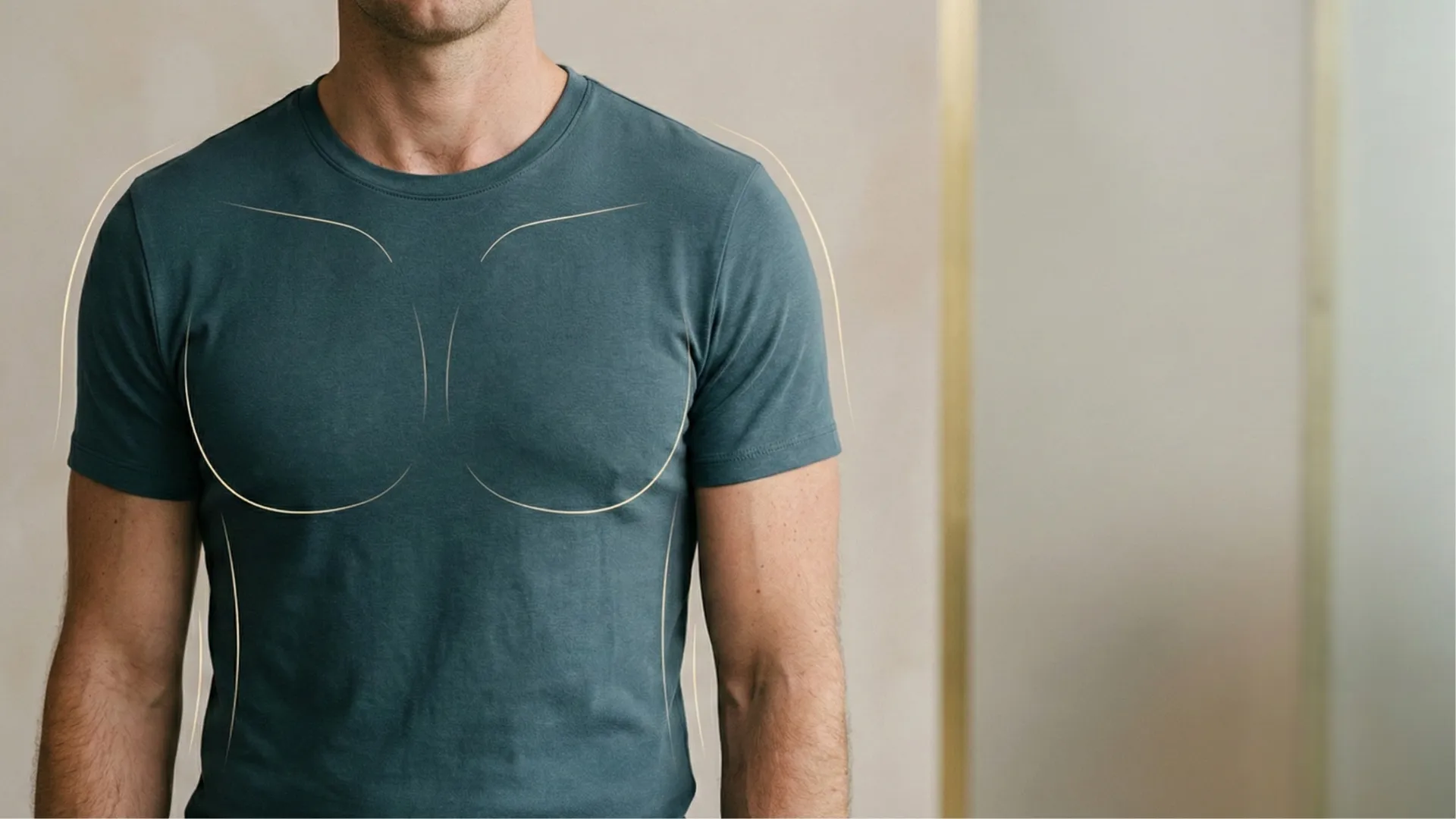
Gynecomastia
At a Glance
A quick overview of what your visit feels like — from time in clinic to recovery, comfort, and how long results last. Everything you need to plan your day with confidence.
.webp)
1 - 2 Hours
.webp)
Same Day Discharge (Outpatient)
.webp)
General Anesthesia or Local + Sedation
.webp)
Back to Work: 3-5 days. Corset Usage: 3-4 weeks
.webp)
Permanent (Provided weight is maintained)

- You have enlarged male breasts that cause social embarrassment.
- You experience sensitivity or pain in the breast tissue.
- Your condition has persisted beyond puberty (adolescence).
- You have ruled out serious hormonal disorders with an endocrinologist.
- You want a flatter, more masculine chest contour.
- "It's just fat, I can diet it off." → False. If the enlargement is due to glandular tissue (true gynecomastia), no amount of diet or exercise will remove it; it requires surgical excision.
- "It only happens to overweight men." → False. Thin men can also have enlarged mammary glands due to hormonal factors.
- "The scars are very visible." → False. In most cases, incisions are hidden around the areola border or are tiny liposuction holes, making them barely visible.
Let's Create Your Treatment Plan Today
We are here to answer your questions and offer you the most suitable aesthetic solutions. Let's plan your process, either in person or through an online consultation.
Free Consultation and analysis
Personalized Surgical Roadmap
24/7 Multilangual Patient Support
Seamless Travel & Accommodation Arrangements
Natural Looking Results & High Satisfaction



Start Your Free Consultation
Thank you for your submission!
What is Gynecomastia?
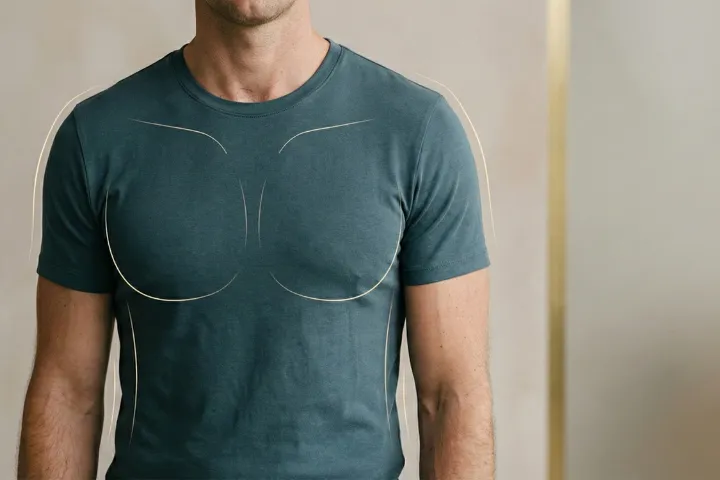
The gynecomastia is to be larger of the male breast than normal. It can affect the social life of the person, depending on the appearance disorder it creates. Although it usually does not cause complaints other than the appearance, some patients can also experience the complaints such as sensitivity or increased sensitivity.
Why the Gynecomastia Occurs?
The disorders in eating habits can cause the breast augmentation in men by causing the abnormal lubrication in the breast. Some hormonal disorders or drugs used can cause augmentation of the mammary gland without an increase in the adipose tissue. In the overweight people, an increase in the fat accumulation in the breasts and changes in the hormone profile of the person can occur. For this reason, the gynecomastia is seen in a significant proportion of the overweight men.
The physiological gynecomastia is seen in the neonatal period, adolescence and old age. About 60% of the newborn boys, there is gynecomastia due to the maternal estrogen. Depending on the amount of the estrogen secreted during the puberty, the gynecomastia can be seen in 50-60% of men. . It is usually expected to go away on its own within 1-2 years. While the gynecomastia can be seen in about 30-60% of middle-aged men, this rate increases even more in the 70s.

What Should Be Done?
It should be investigated whether there are some underlying risky conditions in every patient applying with the gynecomastia First of all, it is checked whether there is a mass that causes growth with the physical examination. If necessary, a more detailed examination is carried out by the breast ultrasound. In addition to the evaluations, it can be checked whether there is a hormone disorder with the opinion of an endocrinologist. After overall evaluation, the patient with the gynecomastia is considered a candidate for the surgery.
How to Treat the Gynecomastia?
In mild cases and in the presence of the breast size only depending on the adipose tissue, the excess adipose tissue can be removed by the liposuction.
In more advanced cases, the remaining breast tissue residues are removed by the liposuction.
In advanced cases, the breast tissue is surgically removed by using an open technique. A semicircular skin incision made in the lower half of the brown area around the nipple is used.
In the patients having the excess skin, the excess skin should be removed in addition to the open technique. This can cause additional stitch scars.
Redefining Form. Restoring Confidence.
From aesthetic enhancement to reconstructive excellence.
Specialized Procedures
Combining advanced medical techniques with an artistic approach to deliver natural, lasting results.














A clear, step-by-step process designed to ensure safety, understanding, and personalized care at every stage.
Your Aesthetic Journey
.webp)
First Contact
.webp)
Travel & Arrival

Medical Preparation
.webp)
Surgery & Recovery
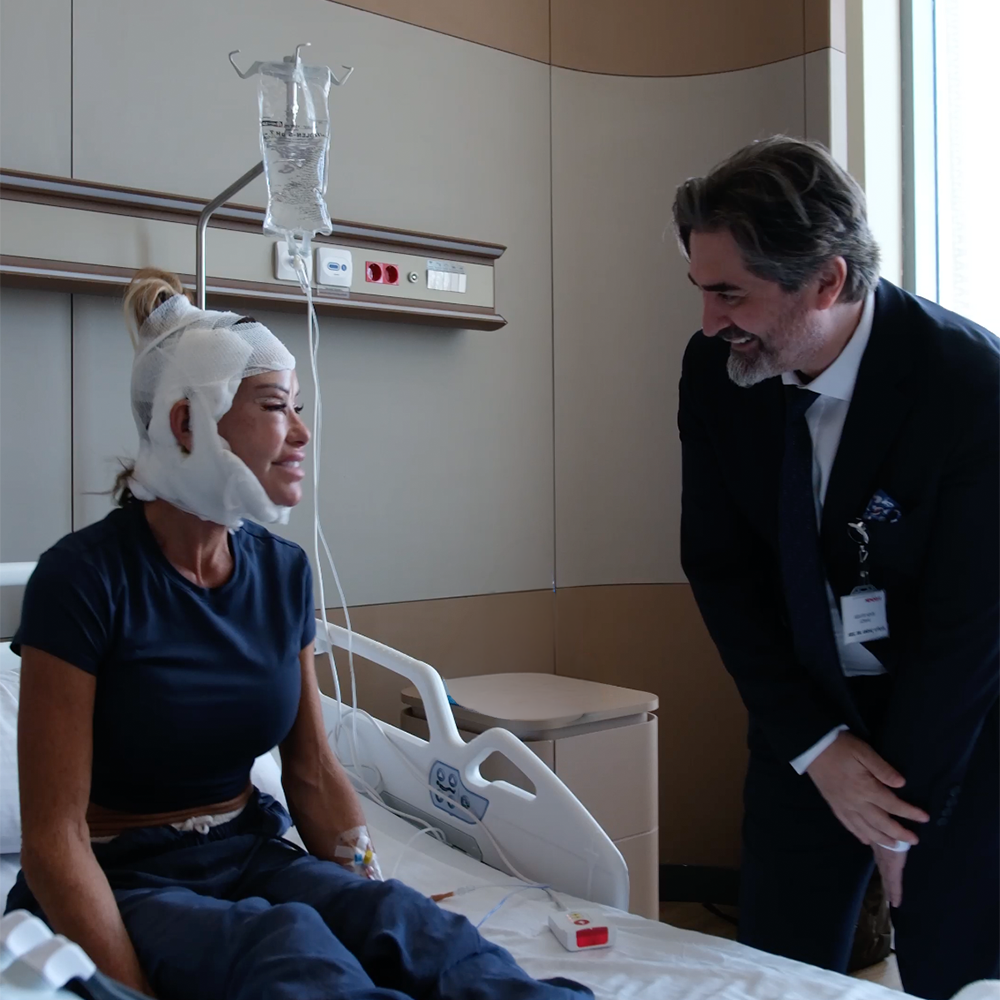
Post-Op Care
.webp)
Lifelong Support
%402x.svg)
%402x.svg)
Have a question?
Every patient’s needs are unique. Share your goals with us, and we’ll guide you with a personalized consultation.
Hear from the Patients
Experiences shared by patients about their care, communication, and overall treatment journey via Google Reviews.

.svg)
.svg)
.svg)
.svg)
