


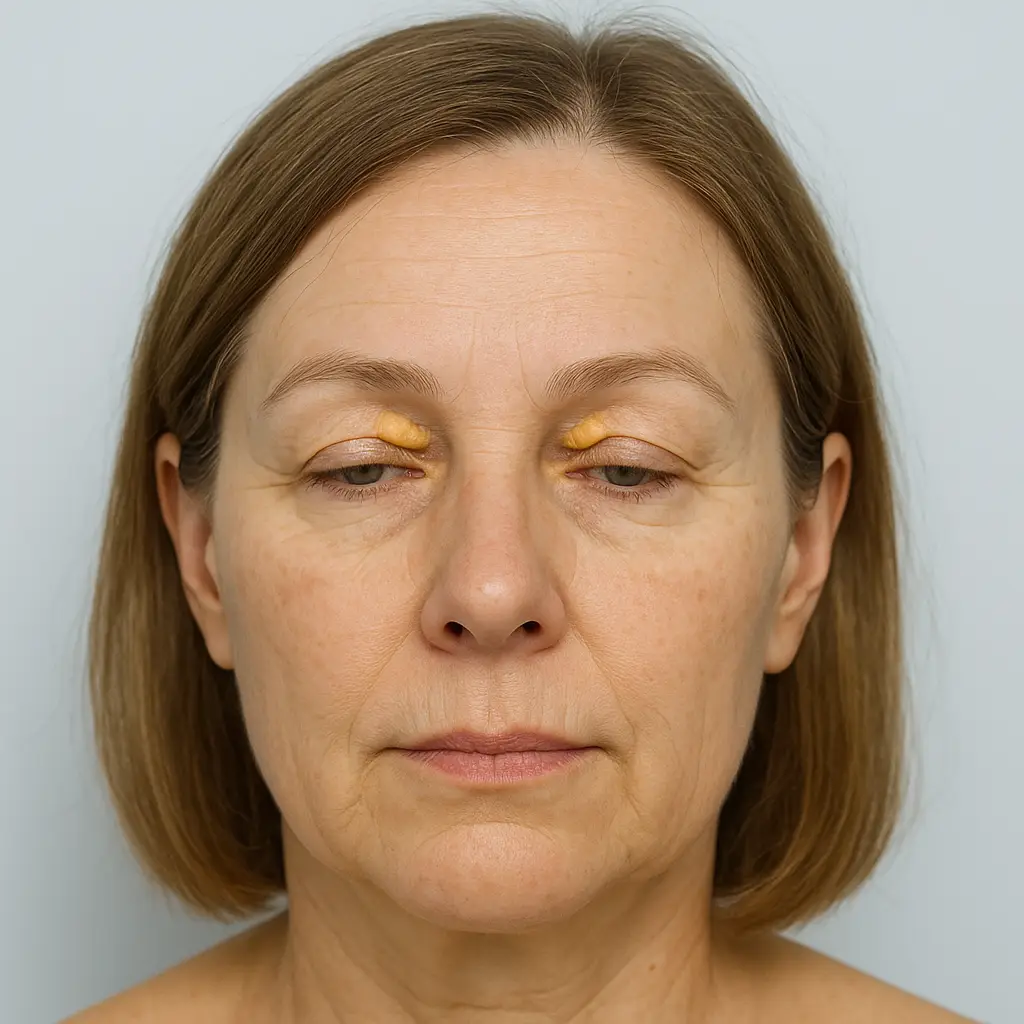
Xanthelasma
What is Xanthelasma?
Xanthelasma is a yellow-white, soft fatty deposit that occurs especially on the inner parts of the eyelids, and is mostly seen on the upper eyelid. These spots are usually painless and can grow slowly over time. It is a common condition to be seen on both eyelids.
Why Does Xanthelasma Occur?
The most common cause of xanthelasma is high cholesterol levels. Especially high LDL (bad cholesterol) and low HDL (good cholesterol) levels can lead to fat accumulation under the skin. However, xanthelasma can also be seen in people with normal cholesterol levels. Genetic predisposition, diabetes, liver diseases and some metabolic disorders can also increase the risk. Therefore, xanthelasma should not only be considered a skin problem, but also a health signal that the body gives us.
What Are The Symptoms of Xanthelasma?
- Yellowish, soft plaques on eyelids
- Painless and growth over time
- Can occur on the eyelids of both eyes at the same time
- Slight blistering on the skin surface, which becomes evident over time
How Is Xanthelasma Diagnosed?
Diagnosis is usually made through clinical examination. A specialist physician can easily diagnose the lesion by looking at its appearance. Blood lipid profile (cholesterol, triglyceride, etc.) tests may also be requested to determine the underlying cause.
What are the Treatment Methods?
- The probability of xanthelasma going away on its own is low. Treatment is preferred for aesthetic or medical reasons. The methods applied are:
- Laser Treatment: It is one of the most common and effective methods. Lesions are vaporized in a controlled manner with a laser. The risk of leaving scars is low.
- Surgical Excision: It is preferred for larger plaques. It is a procedure performed with local anesthesia.
- Cryotherapy (Freezing): It eliminates the lesion by freezing it, but the risk of scarring is slightly higher than laser treatment.
In addition to treatment, if there is underlying high cholesterol, it must be kept under control. Diet, exercise and, if necessary, cholesterol-lowering medications may be recommended.
Does Xanthelasma Recur?
Yes, unfortunately, even if xanthelasma is treated, it can recur if the underlying cause is not corrected. Therefore, in addition to treatment, lifestyle changes and regular medical follow-up are of great importance.
Clinical Insights & Journal
Explore a curated collection of articles delving into the science of aesthetics, surgical innovations, and comprehensive guides designed to enlighten your journey.


.svg)
.svg)
.svg)
.svg)
