


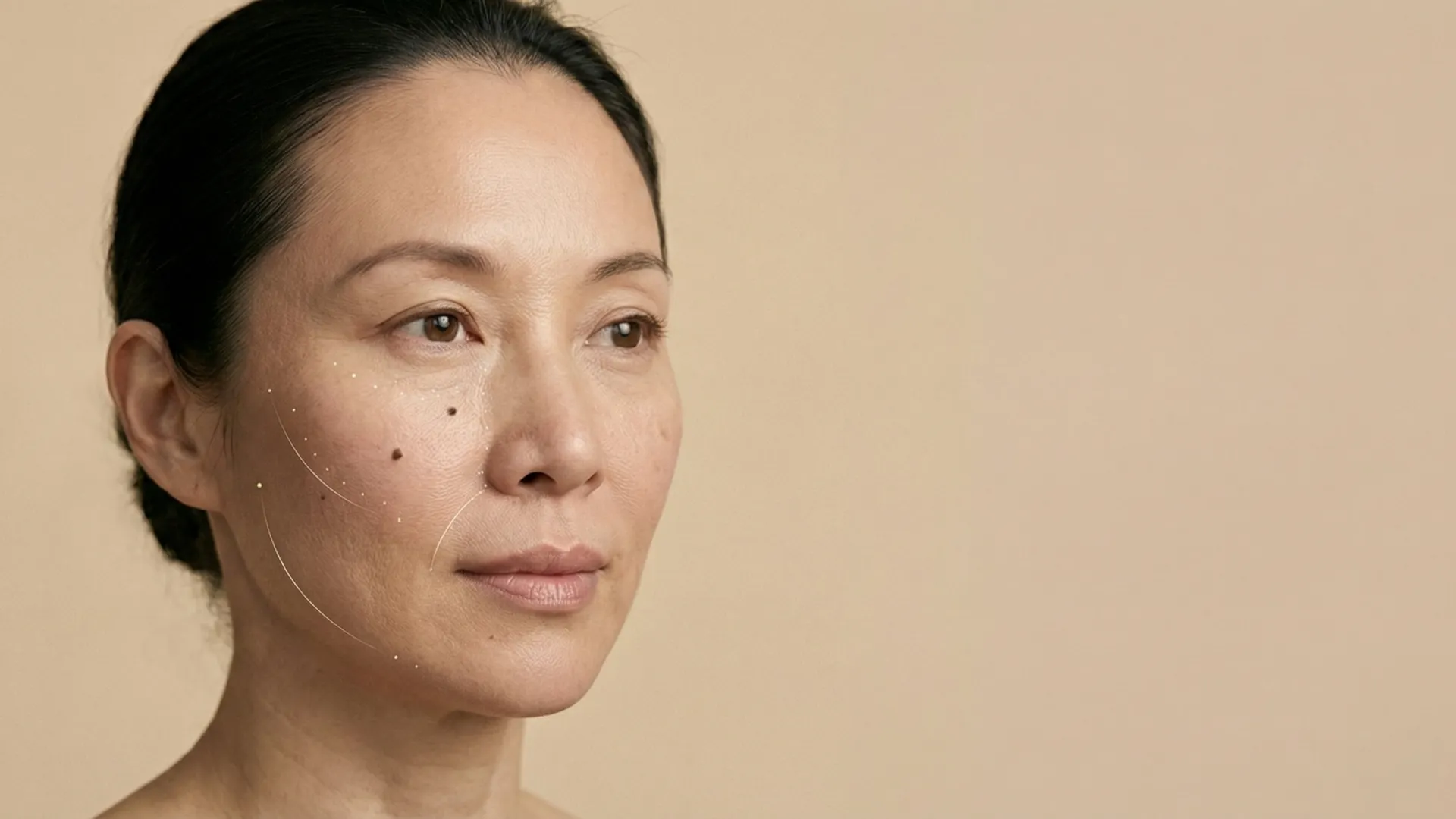
Mole Treatment
At a Glance
A quick overview of what your visit feels like — from time in clinic to recovery, comfort, and how long results last. Everything you need to plan your day with confidence.
.webp)
15 - 30 Minutes
.webp)
Day Case (Outpatient)
.webp)
Local Anesthesia
.webp)
Immediate. Stitches removed in 5-10 days
.webp)
Permanent

- You have a mole that has changed in size, shape, or color.
- You have a mole that bleeds, itches, or is painful.
- You are self-conscious about a mole on your face or body.
- You have a mole that catches on clothing, jewelry, or interferes with shaving.
- You want a definitive diagnosis (biopsy) for a suspicious lesion.
- "Removing a mole causes cancer." -> False. Removing a mole does not cause cancer; in fact, removing a suspicious mole prevents it from spreading if it is malignant.
- "Laser is always better." -> False. For suspicious moles, laser destroys the tissue, making biopsy impossible. Surgical excision is required to check for cancer cells.
- "It leaves a huge scar." -> False. With fine suturing techniques, the scar is usually a thin line that fades significantly over time.
Let's Create Your Treatment Plan Today
We are here to answer your questions and offer you the most suitable aesthetic solutions. Let's plan your process, either in person or through an online consultation.
Free Consultation and analysis
Personalized Surgical Roadmap
24/7 Multilangual Patient Support
Seamless Travel & Accommodation Arrangements
Natural Looking Results & High Satisfaction



Start Your Free Consultation
Thank you for your submission!
What Is a Mole?
Human skin consists of two layers under the microscope, and certain cells are located in these layers. Among them is a group of cells called melanocytes, which give our skin its color and protect us from ultraviolet (UV) rays from the sun. Most of the time, moles are caused by the accumulation and proliferation of these cells. The specific cause of the formation of moles is not fully known. Moles can appear on any part of human skin.

Are Moles Harmful?
Simple moles are commonly found in many people. They do not need to be treated unless they are cosmetically disturbing, getting caught on clothes in the areas such as arms and hands, or causing discomfort in the areas such as the scalp or beard. However, moles with some features may be associated with skin cancer and must be treated.
Moles with the following features may be related to skin cancer;
- Irregular edges
- Brown-black (Dark colored)
- Rapid change in shape and appearance
- Fast growing
- Constantly itchy
- Wound-scabbing on it
Moles with these features should be examined and treated.
Should Moles Be Removed?
All moles with skin cancer-related features mentioned above should be removed under local anesthesia and sent to the pathology laboratory for a definitive diagnosis.
In addition, moles can be removed in the following cases;
- If they bother the person cosmetically
- If they are located on the scalp and cause problems while brushing or cutting hair
- If they are located in the beard area and bleed while shaving
- If they are located in the back, arm, hand area, and snag while wearing clothes • If they cause discomfort or pain
Mole Treatment
There are different options for mole treatment. These are;
- Surgical Excision (Mole Removal)
- Laser
- Freezing (Cryotherapy)
- Burning (Cauterization or Radiofrequency)
Each of these methods has its advantages and disadvantages. Each of these methods has its advantages and disadvantages. However, lesions associated with cancer must be surgically removed and treated. This situation may cause the recurrence of mole formation. If it is related to cancer, cancer cells may remain in the skin.
Mole Removal (Surgical Excision)
The mole removal procedure, or surgical excision, is performed under local anesthesia. After applying local anesthesia, complete numbness and constriction of blood vessels occur (vasoconstriction). This allows the procedure to a bloodless and comfortable way.
If skin closure is required, tiny stitches are preferred. This ensures minimal scarring and often eliminates the need for stitches removal.
The process takes 10-15 minutes in total.
Surgical removal of the mole allows it to be removed from the skin as a whole. This provides two significant advantages:
1. A very low possibility of recurrence
2. The sample taken can be sent for pathology, and a definitive diagnosis can be made by examining it under a microscope.
Redefining Form. Restoring Confidence.
From aesthetic enhancement to reconstructive excellence.
Specialized Procedures
Combining advanced medical techniques with an artistic approach to deliver natural, lasting results.



A clear, step-by-step process designed to ensure safety, understanding, and personalized care at every stage.
Your Aesthetic Journey
.webp)
First Contact
.webp)
Travel & Arrival

Medical Preparation
.webp)
Surgery & Recovery
Post-Op Care
.webp)
Lifelong Support
%402x.svg)
%402x.svg)
Have a question?
Every patient’s needs are unique. Share your goals with us, and we’ll guide you with a personalized consultation.
Hear from the Patients
Experiences shared by patients about their care, communication, and overall treatment journey via Google Reviews.

.svg)
.svg)
.svg)
.svg)
