


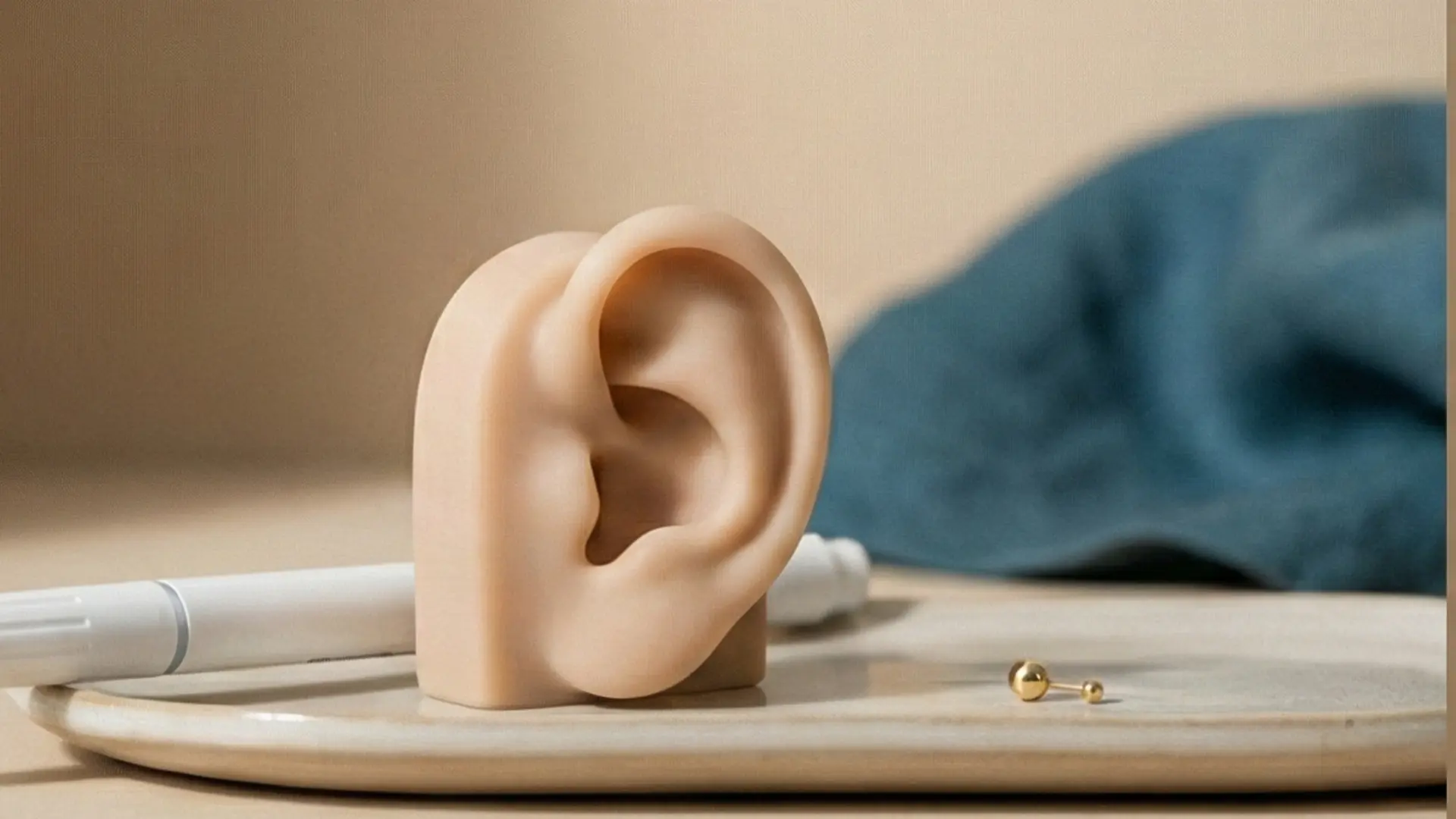
Microtia Repair
At a Glance
A quick overview of what your visit feels like — from time in clinic to recovery, comfort, and how long results last. Everything you need to plan your day with confidence.
.webp)
3 - 5 Hours
.webp)
1 - 2 Nights
.webp)
General Anesthesia
.webp)
Return to School: 2 weeks. Avoid Contact Sports: 3-6 months
.webp)
Permanent

- The patient is typically between 8 and 10 years old.
- The patient has a sufficient chest circumference for rib cartilage harvesting.
- The patient is born with Microtia (small ear) or Anotia (no ear).
- The goal is to reconstruct the outer ear (auricle) for aesthetic balance.
- The family and patient understand that this surgery reconstructs the shape, not necessarily the hearing (canal surgery is separate).
- "This surgery restores hearing." -> False. This surgery reconstructs the external ear shape. Opening the ear canal (Atresiaplasty) or using hearing aids (BAHA) are separate treatments.
- "Taking rib cartilage hurts for life." -> False. While the chest area is sore initially, the cartilage removal does not cause health problems or appearance disorders in later life.
- "It can be done at any age." -> False/Clarification. While adults can have it, it is best done around age 8-10 when the rib cartilage is ideal for carving and the ear has grown enough.
Let's Create Your Treatment Plan Today
We are here to answer your questions and offer you the most suitable aesthetic solutions. Let's plan your process, either in person or through an online consultation.
Free Consultation and analysis
Personalized Surgical Roadmap
24/7 Multilangual Patient Support
Seamless Travel & Accommodation Arrangements
Natural Looking Results & High Satisfaction



Start Your Free Consultation
Thank you for your submission!
What is Microtia?
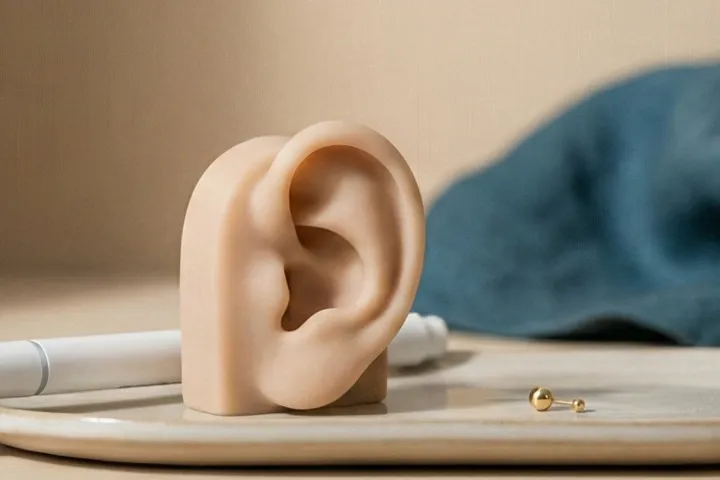
The microtia is defined as the congenital smallness, deformity or absence (Anotia) of the auricle. The ear consists of the outer, middle and inner ear structures. The congenital inability or underdevelopment of the outer ear (auricle) is called as the “Microtia”.
The microtia can be unilateral or bilateral. It is unilateral in most patients. The reason for this formation depends on many factors. Some medications (such as thalidomide) or infections (such as rubella) used by the mother during the pregnancy can cause this condition. In most patients, there is no external auditory canal, it is closed. Since the auricle and external auditory canal develop from the same structures in the womb, the people having the microtia usually do not have an external auditory canal. In the absence of the external auditory canal, hearing is reduced in the ear on that side. The structures in the middle ear (eardrum, middle ear ossicle, hammer, anvil, stirrup) do not develop in those who do not have an external auditory canal. The lack of the development of these structures also prevents hearing. There is no problem in the inner ear except in rare cases.
What is the Surgical Treatment of the Microtia?
The aim is to reconstruct the deformed or incompletely formed outer ear structure. It is not possible to perform the outer ear canal or inner ear surgery with this surgery.
At What Age Should the Microtia Be Done?
It is easier to perform the surgeries performed at an early age with the rib cartilages that have reached adequate development. Usually around the age of 8 years, the thorax and normal ear development are considered suitable for this surgery.
How to Perform the Microtia Surgery?
The correction of the microtia cannot be done with a single surgery. According to the surgical technique used; 2, 3 or 4 sessions of the surgery can be required for those who have no auricle.
The microtia operations are performed under the general anesthesia and certain periods are left between the operations.
In order to create a natural ear, the cartilage skeleton of the ear should first be prepared. The rib cartilage is used for this. The cartilage removal from the rib does not cause any health problems or appearance disorders in later life.
In the first session of the surgery, the cartilage taken from the patient’s own ribs is shaped with the help of the various sutures and a normal ear roof is formed. Then, a subcutaneous socket is opened in the extra-ear region and the ear skeleton is placed there. During this session, the earlobe can be shifted to the area where it is required to be.
The second surgery session is done a few months after the first. The aim is to form the back of the ear tissue, which is attached to the skull. The ear mold placed in the first session is slightly separated from the skull, although there is skin tissue in front of it. A thin skin graft (patch) taken from the groin is also transplanted here to form behind of the ear.
If necessary, in other session surgeries, it can be made to create the earlobe, adjust the location of the earlobe, create the ear hole protrusion in front of the ear hole and create the collapsed ear hole. These corrections can also be made in the first 2 sessions of the surgery, depending on the patient and surgical technique. Three or four sessions of the surgery can also be required.
Redefining Form. Restoring Confidence.
From aesthetic enhancement to reconstructive excellence.
Specialized Procedures
Combining advanced medical techniques with an artistic approach to deliver natural, lasting results.





A clear, step-by-step process designed to ensure safety, understanding, and personalized care at every stage.
Your Aesthetic Journey
.webp)
First Contact
.webp)
Travel & Arrival

Medical Preparation
.webp)
Surgery & Recovery
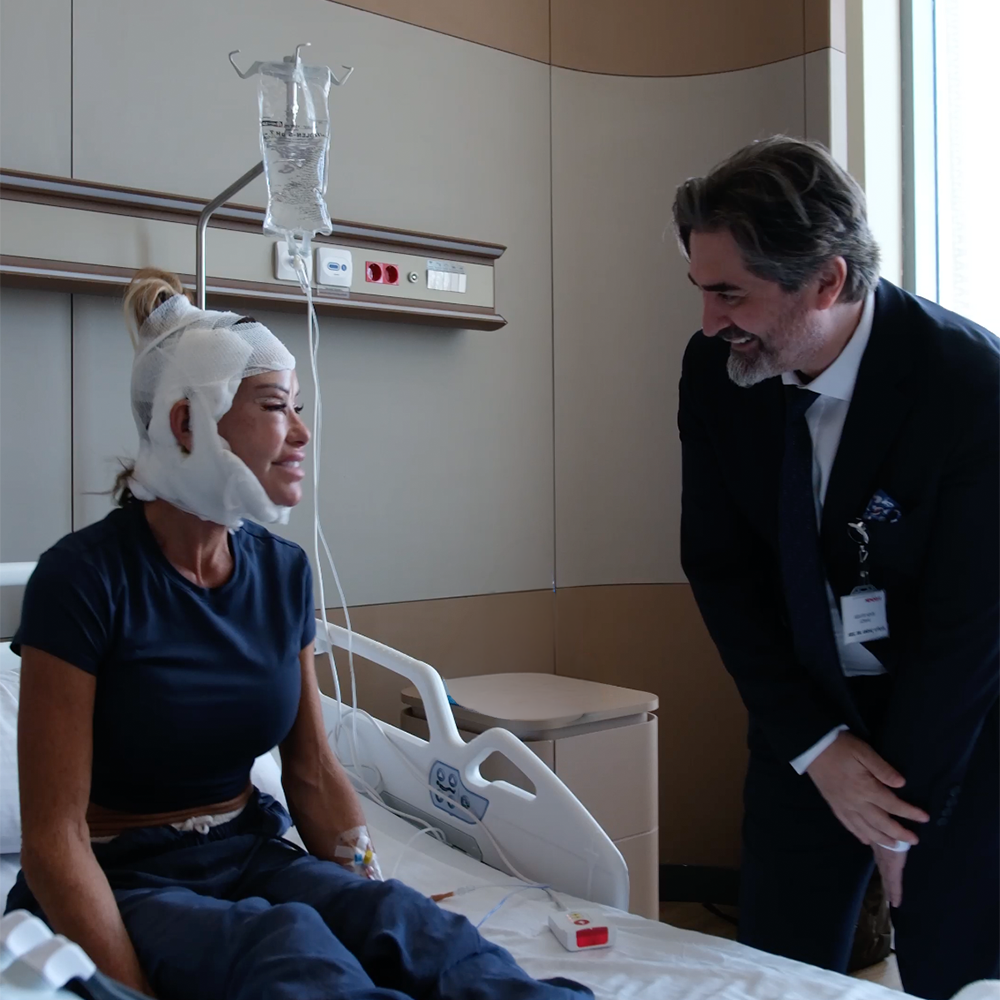
Post-Op Care
.webp)
Lifelong Support
%402x.svg)
%402x.svg)
Have a question?
Every patient’s needs are unique. Share your goals with us, and we’ll guide you with a personalized consultation.
Hear from the Patients
Experiences shared by patients about their care, communication, and overall treatment journey via Google Reviews.

.svg)
.svg)
.svg)
.svg)
