



Skin Cancers
At a Glance
A quick overview of what your visit feels like — from time in clinic to recovery, comfort, and how long results last. Everything you need to plan your day with confidence.
.webp)
30 - 60 Minutes
.webp)
Day Case (Outpatient)
.webp)
Local Anesthesia
.webp)
Immediate. Stitches removed in 5-10 days
.webp)
Permanent (if fully excised)

- You have a new growth or sore that does not heal within two weeks.
- You have a mole that changes in size, shape, or color (ABCDE rule).
- You have a mole that bleeds, itches, or is painful.
- You have a history of intense sun exposure or sunburns.
- You have a fair complexion (light skin) which is at higher risk.
- "Is prevention possible?" -> Yes. Avoiding long-term sun exposure (especially between 10 AM - 4 PM) and using broad-spectrum sunscreen (SPF 50) is the best prevention.
- "Is treatment possible?" -> Yes. Early diagnosis is life-saving. Most skin cancers (especially BCC and SCC) have a very high cure rate when treated early.
- "Only old people get it." -> False. While risk increases with age due to accumulated sun exposure, skin cancer can occur in younger adults as well.
Let's Create Your Treatment Plan Today
We are here to answer your questions and offer you the most suitable aesthetic solutions. Let's plan your process, either in person or through an online consultation.
Free Consultation and analysis
Personalized Surgical Roadmap
24/7 Multilangual Patient Support
Seamless Travel & Accommodation Arrangements
Natural Looking Results & High Satisfaction



Start Your Free Consultation
Thank you for your submission!
What are Skin Cancers?
Skin cancer is cancer that starts as a growth of cells on the skin. The cells can invade and destroy healthy body tissue. Sometimes the cells break away and spread to other parts of the body. Many kinds of skin cancer exist. The most common skin cancers are basal cell carcinoma and squamous cell carcinoma.
What Are the Risk Factors Associated with Skin Cancer?
The most important risk factor for the development of skin cancer is excessive sunlight (ultraviolet) exposure.
In addition, exposure to radiation, exposure to arsenic and hydrocarbons (cigarette smoke, especially the lip area), long-term scars and inflammation of the skin, viral infections such as HPV are other factors that increase the risk of skin cancer.

Is Skin Cancer Diagnosis and Treatment Possible?
Skin Cancer Suspect
Especially in areas exposed to the sun more:
The skin lesions those are localized and persistent, disfigure, and itch are on the:
- Head,
- Neck,
- Lips,
- Ear,
- Hand and
- Arm skin
Dark-colored lesions
(moles) on all body areas, with irregular margins, brown-black, rapid change in shape and appearance, or rapid growth…
Skin Cancer Diagnosis
The diagnosis of skin cancer is made with the pathological examination performed after the biopsy procedure applied to the suspicious lesion.
Biopsy (Excisional Biopsy)
The lesions suspected of the skin cancer can be taken for sampling under the the local anesthesia. The area to be biopsied is marked with a skin pen before the procedure. The local anesthetic is injected under the skin with a fine-tipped needle. Complete loss of sensation occurs in about 10 seconds. The suspicious lesion is removed and placed in the pathology container. The sample site is repaired with simple skin sutures and dressed. The patient can return to his daily activities immediately after the procedure.
What are the Types of Skin Cancer?
There are 3 main types of skin cancer:
- Basal Cell Carcinoma (Basal Cell Carcinoma-BCC)
- Squamous Cell Carcinoma (SCC)
- Malignant Melanoma (MM)
Basal Cell Carcinoma (BCC)
The Basal Cell Carcinoma is the most common skin cancer. It is a more benign skin cancer than other skin cancers. Spread (metastasis) to distant body parts is very rare. They appear as small, slowly progressive scaling, vascularization, and peeling of the skin. If left untreated, they tend to crust, bleed, and ulcerate.
Squamous Cell Carcinoma (SCC)
The Squamous cell carcinoma is the second most common skin cancer. It is considered a worse skin cancer than basal cell carcinoma. It has a tendency to spread (metastasize) to deep tissues and distant body parts. It can appear as non-healing and rapidly growing crusty sores. It can occur as a scar that does not heal on the lower lip.
Malignant Melanoma
It is the rarest skin cancer among skin cancers but the most common cause of death depending on the skin cancer. It is quite malignant, it spreads (metastasizes) to distant body parts in the early period. It originates from the cells called melanocytes that give the skin its color and can be seen all over the body. It presents as rapidly growing, changing shape, black-brown moles or spots.
Skin Cancer Treatment
The basic treatment approach of the skin cancer is to remove the tumor tissue without recurrence (surgical excision). The treatment applied should leave the least possible scar on the patient and should not cause functional losses. The treatment approach to be applied varies according to the type of the skin cancer. In general, the surgical removal of the skin cancer is sufficient for treatment in patients diagnosed with the Basal Cell Carcinoma (BCC). In the Squamous Cell Cancers and Malignant Melanoma, extensive removal of the lesion and, if necessary, treatment of the regional lymph nodes (sentinel lymph node biopsy, regional lymph node dissection) can be required.
Redefining Form. Restoring Confidence.
From aesthetic enhancement to reconstructive excellence.
Specialized Procedures
Combining advanced medical techniques with an artistic approach to deliver natural, lasting results.




A clear, step-by-step process designed to ensure safety, understanding, and personalized care at every stage.
Your Aesthetic Journey
.webp)
First Contact
.webp)
Travel & Arrival

Medical Preparation
.webp)
Surgery & Recovery
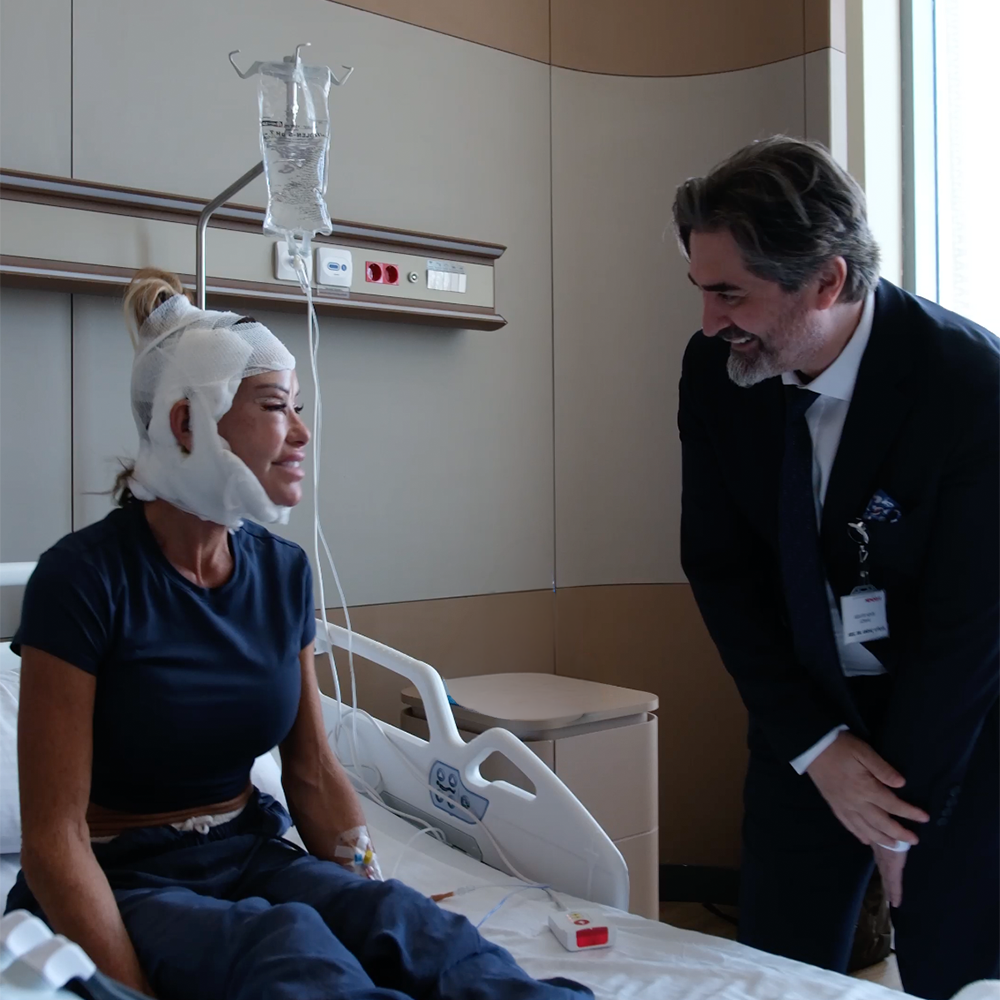
Post-Op Care
.webp)
Lifelong Support
%402x.svg)
%402x.svg)
Have a question?
Every patient’s needs are unique. Share your goals with us, and we’ll guide you with a personalized consultation.
Hear from the Patients
Experiences shared by patients about their care, communication, and overall treatment journey via Google Reviews.

.svg)
.svg)
.svg)
.svg)
