

Revisions-Nasenkorrektur
Auf einen Blick
Ein kurzer Überblick darüber, wie sich Ihr Besuch anfühlt — von der Zeit in der Klinik über die Genesung bis hin zum Komfort und wie lange die Ergebnisse anhalten. Alles, was Sie brauchen, um Ihren Tag mit Zuversicht zu planen.
.webp)
Durchschnittlich 3-4 Stunden. (Komplexer als Primärfälle)
.webp)
1 Nacht (am Folgetag entlassen)
.webp)
Vollnarkose
.webp)
Entfernung der Schienen: 7 Tage. Soziale Erholung: 10-14 Tage. Vollständige strukturelle Heilung: 12 Monate
.webp)
Dauerhaft (Ergebnisse stabilisieren sich allmählich im Laufe eines Jahres)

- Sie haben nach einer früheren Nasenoperation anhaltende Atemprobleme.
- Sie sind mit dem ästhetischen Ergebnis unzufrieden (Asymmetrie, Kollaps oder Deformität).
- Seit Ihrer letzten Nasenoperation sind mindestens 12 Monate vergangen.
- Sie haben realistische Erwartungen an die Komplexität einer Revisionsoperation.
- Sie verstehen, dass für die Rekonstruktion möglicherweise Knorpel aus dem Ohr oder der Rippe benötigt werden.
- „Die Revision ist einfacher.“ → Falsch. Aufgrund des Narbengewebes und der veränderten Anatomie ist es technisch anspruchsvoller.
- „Ich kann es sofort reparieren lassen.“ → Falsch. Sie müssen warten, bis das Gewebe verheilt ist (min. 6-12 Monate), bevor Sie erneut operieren.
- „Rippenknorpel fühlt sich falsch an.“ → Falsch. Der körpereigene Rippenknorpel integriert sich in Ihren Körper und bietet die natürlichste, langfristige strukturelle Unterstützung.
Lassen Sie uns noch heute Ihren Behandlungsplan erstellen
Wir sind hier, um Ihre Fragen zu beantworten und Ihnen die am besten geeigneten ästhetischen Lösungen anzubieten. Lassen Sie uns Ihren Prozess planen, entweder persönlich oder im Rahmen einer Online-Beratung.
Kostenlose Beratung und Analyse
Personalisierte chirurgische Roadmap
Mehrsprachiger Patientensupport rund um die Uhr
Reibungslose Reise- und Unterkunftsarrangements
Natürlich aussehende Ergebnisse und hohe Zufriedenheit
Starten Sie Ihre kostenlose Beratung
Thank you for your submission!
Was ist eine sekundäre (Revisions-) Nasenkorrektur?
Eine sekundäre oder revisionäre Nasenkorrektur bezieht sich auf Operationen zur Korrektur von Formverformungen, Unregelmäßigkeiten und Atembeschwerden, die im Laufe der Zeit nach einer ersten Nasenoperation aufgetreten sind. Sie wird bei Patienten durchgeführt, die sich einer früheren Nasenoperation unterzogen haben, aber aus verschiedenen Gründen unzufrieden sind. In Fällen, in denen eine Person zwei Nasenoperationen hatte und eine weitere benötigt, wird das Verfahren typischerweise als „tertiäre Nasenkorrektur“ bezeichnet. Sehprobleme im Zusammenhang mit der Nase können Monate oder Jahre nach der ersten Operation auftreten.
In welchen Fällen wird es durchgeführt?
Nach einer Nasenoperation können verschiedene Situationen auftreten, die zur Notwendigkeit einer sekundären Nasenkorrektur führen können.
Die sichtbaren asymmetrischen oder breiten Nasenlöcher, der Zusammenbruch der Nasenseitenwände und Nasenflügel (Alarkollaps) und Atembeschwerden sind die häufigsten. Die Wölbung am Nasenrücken kann sich fortsetzen; es kann zu Kollaps oder Unregelmäßigkeiten im Nasenrücken kommen, durch zu viel Knorpel entsteht ein Polly Schnabel oder aufgrund einer übermäßigen Verkleinerung kann eine Sattelnase entstehen. Es kann ein umgekehrtes V-Bild in der Nasenmitte, eine Krümmung der Nase, eine Fortsetzung der Abweichung, Unregelmäßigkeiten am Nasenrücken, eine übermäßige Narbenbildung innerhalb oder außerhalb der Nase sowie Haut- und Weichteilprobleme auftreten.
Bei all diesen Problemen wird eine sekundäre Nasenkorrektur durchgeführt.
Wann sollte es durchgeführt werden?
Der Heilungsprozess im menschlichen Körper dauert mindestens 12 Monate (1 Jahr). Während dieser Zeit setzen sich die Prozesse von Knorpel und Knochen fort, sich an ihre neuen Formen anzupassen und zu reparieren. Bei Patienten mit primärer Nasenkorrektur wird empfohlen, mindestens sechs Monate, vorzugsweise ein Jahr, auf die Revision oder sekundäre Nasenkorrektur zu warten. Während dieser Zeit nimmt die bei der ersten Operation aufgetretene Schwellung ab und die Nase beginnt, ihre endgültige Form anzunehmen. Das Warten auf diesen Zeitraum erhöht die Erfolgsrate der sekundären Nasenkorrektur, da die Probleme durch die Abnahme der Schwellung deutlicher und sichtbarer werden.
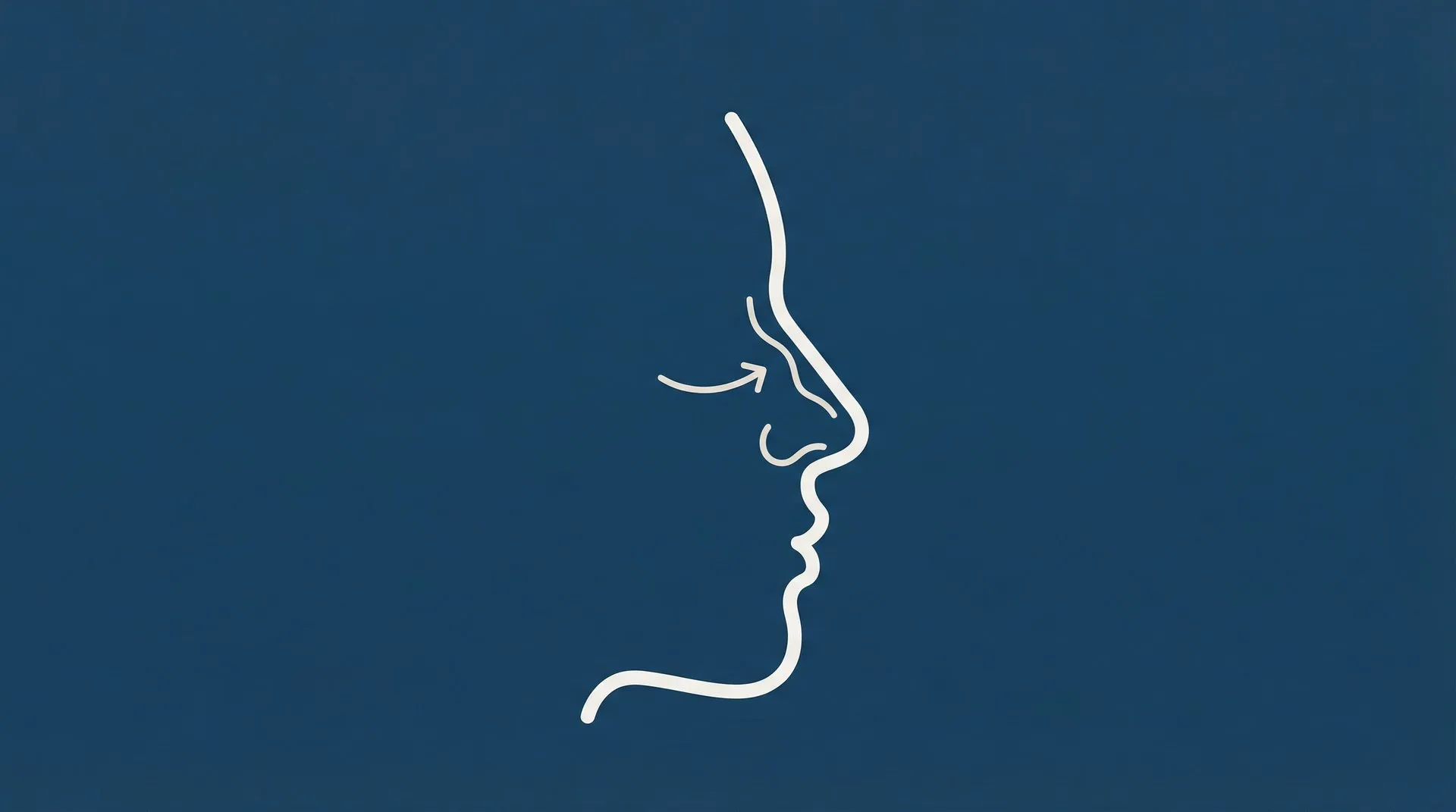
Wie läuft die präsekundäre Nasenkorrektur ab?
Eine ausführliche körperliche Untersuchung und eine Konsultation zwischen Patient und Arzt sind besonders wichtig für Patienten, die sich einer sekundären Nasenoperation unterziehen. Die Patienten waren nach ihrer ersten Operation aufgrund von Problemen unzufrieden und erwarten natürlich, dass ihre Probleme gelöst werden.
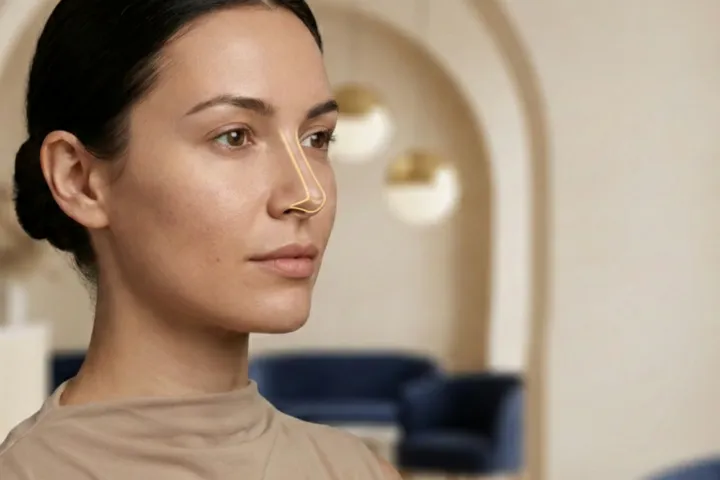
Nasenanalyse — 3D Vectra XT® -Simulation
Während des ausführlichen Interviews und der Prüfung mit Assoc. Prof. Dr. Aykan von der Aykan Clinic, die Erwartungen des Patienten werden verstanden und die bestehenden Probleme werden deutlich aufgedeckt. Durchführung von 3D-Bildgebung und -Analyse (mit VectraXT)® und Visia™ Geräte) vor der Operation für unsere Patienten, die eine Nasenkorrektur oder eine sekundäre Nasenkorrektur benötigen, ermöglicht eine klarere Wahrnehmung von Problemen im Zusammenhang mit der Nase. Gleichzeitig werden bei der Bearbeitung dieser hochauflösenden 3D-Bilder mögliche Ergebnisse, die nach der Operation erzielt werden, mit unseren Patienten geteilt.
Knorpelbedarf bei der sekundären Nasenkorrektur
Je nach Verfahren bei der sekundären Nasenkorrektur muss manchmal zusätzlicher Knorpel aus benachbarten Geweben entnommen werden. Ohr- und Brustknorpel (Rippentransplantat) des Patienten sind die am häufigsten bevorzugten Quellen. Je nach Menge und Lage des Knorpels, der bei der sekundären Nasenkorrektur benötigt wird, wird zwischen diesen beiden Quellen (Ohr oder Brust) gewählt. Kullanım yerine göre bu iki kıkırdak tipinin birbirine göre avantaj ve dezavantajları vardır. Diese beiden Knorpelarten haben je nach Einsatzort Vor- und Nachteile.
Sekundäre Nasenkorrektur
Sekundäre (Revisions-) Nasenkorrekturen können im Vergleich zu primären Operationen einige chirurgische Herausforderungen mit sich bringen. Daher sind die Erfahrung und das Fachwissen des Chirurgen der wichtigste Faktor für den Erfolg einer sekundären Revision der Nase. Adhäsion und Narbengewebe, das sich aufgrund der ersten Operation in der Nase bildet, verändern die normale Nasenanatomie. Da bei der ersten Operation in das Knochen- und Knorpelgewebe in der Nase eingegriffen wurde, wurden gleichzeitig die erwarteten und gewohnten Grundstrukturen verändert, verschoben oder auf unterschiedliche Weise verändert. In einigen Fällen können Knorpel- und Knochengewebe verloren gehen. Je nach Menge und Struktur des Knorpels, der bei diesen Patienten benötigt wird, muss der Knorpel möglicherweise aus der Brust oder dem Ohr entnommen werden.
Diese Verfahren erfordern andere Herangehensweisen als die Techniken, die bei einer Standard-Nasenkorrektur verwendet werden. Daher ist die Erfahrung des Chirurgen bei der Durchführung der sekundären Nasenkorrektur entscheidend für den Erfolg.
Bei einer Revisionsnasenoperation handelt es sich um eine Nase, an der bereits ein chirurgischer Eingriff durchgeführt wurde. Das Heilungs- und Narbengewebe in der Nase resultierte aus dem ersten chirurgischen Eingriff. Wenn erneut eine Nasenoperation durchgeführt wird, werden diese Bereiche erneut behandelt. Dies erhöht die Heilungsdauer und das Ausmaß der Schwellungen/Blutergüsse. Diese nachteiligen Situationen können durch geeignete Techniken, moderne Technologien und Hilfsmittel während der Operation minimiert werden.
Assoc. Prof. Dr. Andaç Aykan verwendet moderne Technologien wie mikromotorische, piezochirurgische Instrumente bei der Operation von Patienten mit sekundärer Nasenkorrektur mit mehr als 18 Jahren Erfahrung. Die Behandlung zur Reduzierung von Ödemen (Schwellungen) erfolgt unmittelbar nach der Operation mit professionellen Kühlsystemen, die speziell für den Gesichtsbereich entwickelt wurden.
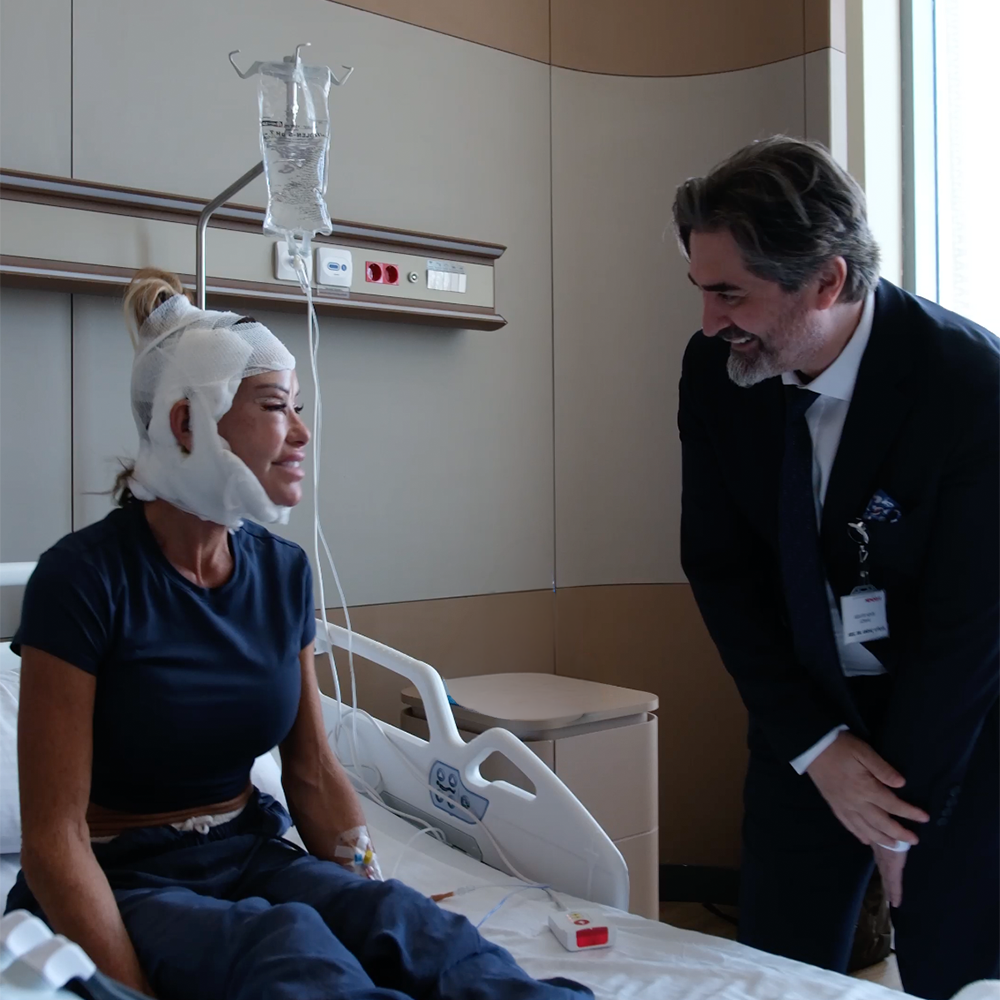
Dr. Aykan empfiehlt, nach der Operation eine Nacht lang im Krankenhaus unter Beobachtung zu bleiben. Sie können am darauffolgenden Tag entlassen werden. Die kleine Plastikschiene, die zum Schutz auf die Nase gelegt wird, wird am Ende der ersten Woche entfernt. Blutergüsse sind nicht bei jedem Patienten zu erwarten, treten jedoch häufiger bei hellhäutigen Patienten mit dünner Haut auf. Die vollständige Genesung und die endgültige Formgebung können aufgrund der Beschaffenheit des Revisionsgewebes bis zu einem Jahr oder länger dauern.
Nach einer sekundären Nasenkorrektur
Dr. Aykan empfiehlt, nach der Operation eine Nacht lang im Krankenhaus unter Beobachtung zu bleiben. Sie können am darauffolgenden Tag entlassen werden. Die kleine Plastikschiene, die zum Schutz auf die Nase gelegt wird, wird am Ende der ersten Woche entfernt. Während dieser Zeit solltest du dich ausruhen. Während der Erholungsphase kann es zu Blutergüssen und Schwellungen kommen, die je nach Lebensstil und Gewohnheiten variieren können. Der Heilungsprozess ist aufgrund der unterschiedlichen Hautstruktur von Person zu Person unterschiedlich. Beispielsweise hält die Abnahme der Schwellung bei Menschen mit dickerer Nasenhaut länger an. Blutergüsse sind nicht bei jedem Patienten zu erwarten und treten häufiger bei hellhäutigen Patienten mit dünner Haut auf. Nachuntersuchungen und Kontrollen nach der Operation werden regelmäßig in der Aykan Clinic durchgeführt.
Form neu definieren. Wiederherstellung des Vertrauens.
Von ästhetischer Verbesserung bis hin zu rekonstruktiver Exzellenz.
Spezialisierte Verfahren
Kombiniert fortschrittliche medizinische Techniken mit einem künstlerischen Ansatz, um natürliche, dauerhafte Ergebnisse zu erzielen.






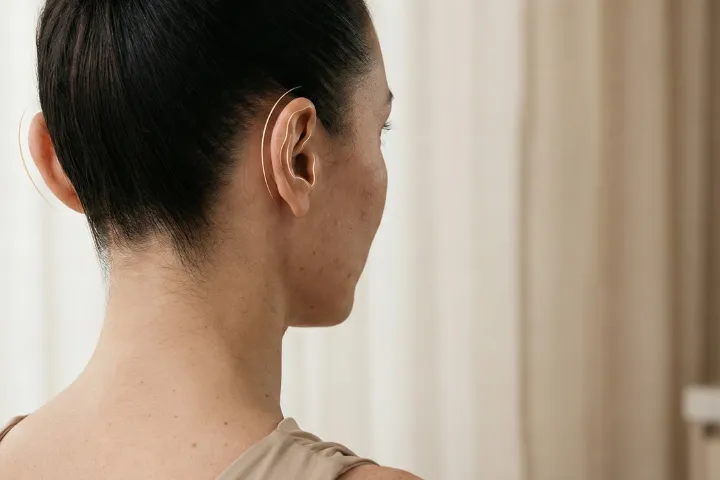
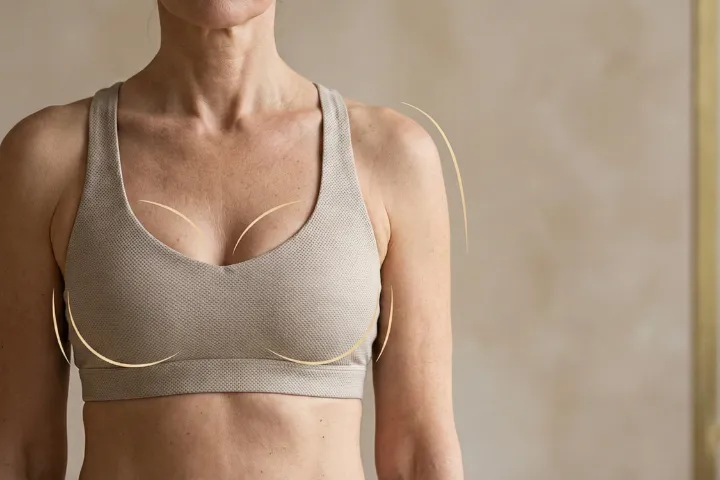
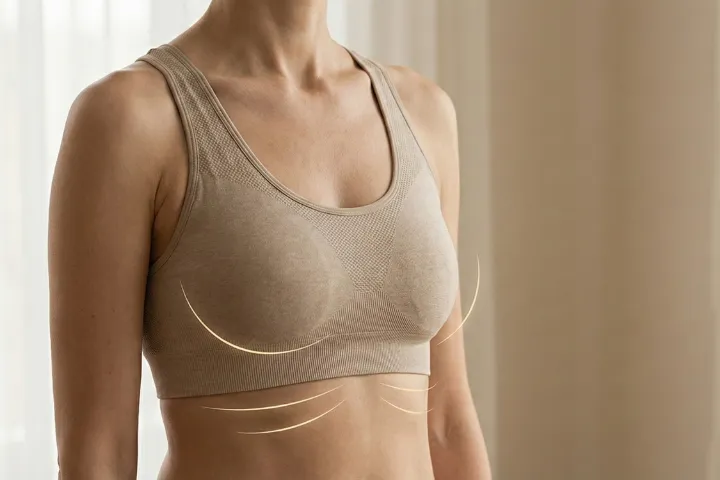

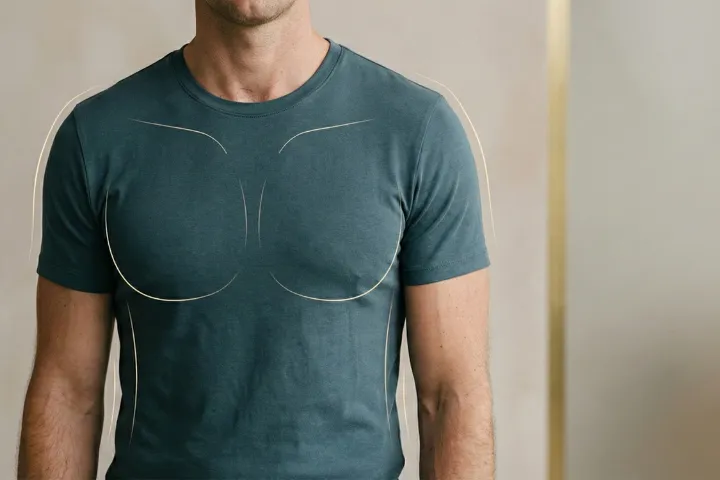







Ein klarer, schrittweiser Prozess, der Sicherheit, Verständnis und persönliche Betreuung in jeder Phase gewährleistet.
Ihre ästhetische Reise
.webp)
Erster Kontakt
.webp)
Anreise & Ankunft

Medizinische Vorbereitung
.webp)
Operation und Genesung
Pflege nach der Operation
.webp)
Lebenslange Unterstützung
%402x.svg)
%402x.svg)
Haben Sie eine Frage?
Die Bedürfnisse jedes Patienten sind einzigartig. Teilen Sie uns Ihre Ziele mit und wir beraten Sie persönlich.
Das sagen unsere Patienten
Erfahrungen, die Patienten über ihre Versorgung, Kommunikation und den gesamten Behandlungsverlauf über Google Reviews teilen.

.svg)
.svg)
.svg)
.svg)
