


Functional Rhinoplasty: Where Nose Aesthetics and Functionality Meet
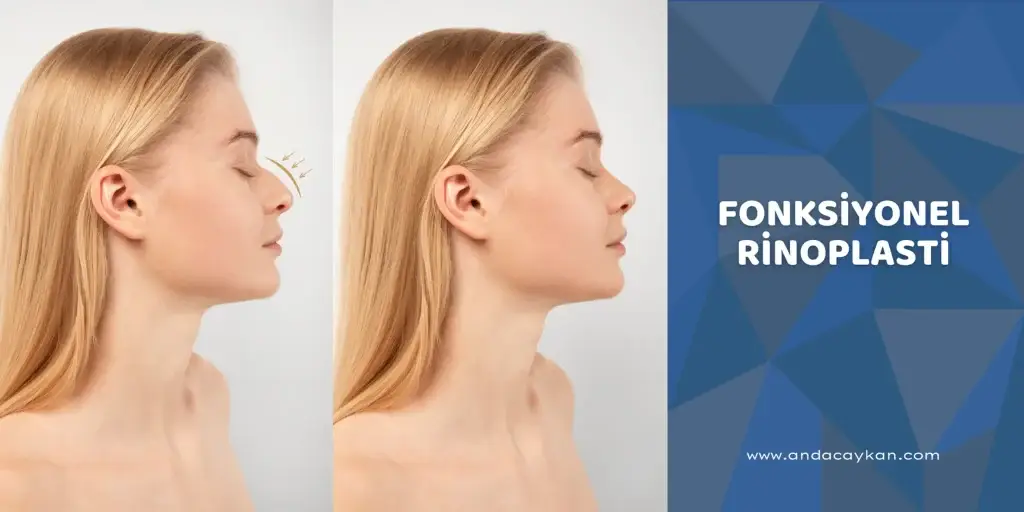
What is Functional Rhinoplasty?
Functional rhinoplasty is a surgical procedure to improve aesthetic and respiratory functions. It aims to eliminate not only aesthetic concerns but also health problems in people with nasal congestion, difficulty in breathing, or nasal structural disorders. Correcting conditions such as septum deviation, concha hypertrophy, and nasal valve insufficiency are among the main goals of functional rhinoplasty.
Who is Suitable for Functional Rhinoplasty?
This surgery is recommended for people who have the following problems:
- Chronic nasal congestion
- Septum deviation (curvature of the nose)
- Nasal valve insufficiency
- Concha hypertrophy (enlargement of nasal turbinates)
- Previously unsuccessful nose surgeries
- Deformations resulting from nasal trauma
How is Functional Rhinoplasty Performed?
Functional rhinoplasty can be performed with an open or closed technique, depending on the patient’s nasal and respiratory problems.
Preoperative Evaluation
Before functional rhinoplasty, the patient’s internal and external nasal structures are examined in detail. The patient’s breathing problems are evaluated and the source of the obstruction in the respiratory tract is determined. In this process, appropriate surgical planning is made taking into account the patient’s medical history, previous nose surgeries and current complaints. The patient’s nose is examined in detail inside and outside. The source of the breathing problems is determined and a surgical plan is created.
Anesthesia Administration
Functional rhinoplasty is usually performed under general anesthesia. General anesthesia is the most appropriate method so that the patient does not feel any discomfort during the surgery and the surgeon can work comfortably in a bloodless environment. The patient is evaluated by the anesthesiologist before the application.
Surgical Intervention
The nasal structures and septum curvature are corrected during the surgical procedure, and the respiratory tract is relieved and opened. In patients with nasal valve insufficiency, the nasal structure is supported by using cartilage grafts (supports). In patients with turbinate hypertrophy, the nasal turbinates are reduced to optimize airflow. The surgeon reshapes the nasal structure in the best way possible, both functionally and aesthetically.
Post-Operative Process
Functional rhinoplasty surgery usually takes 2-3 hours. The patient is discharged the same day or the next day after the operation. Mild swelling and bruising may occur in the first few days but will decrease over time. The silicone perforated tampons placed inside the nose are usually removed within 1 week. Even in this early period, patients can observe their respiratory functions improving and relaxing. However, the complete resolution of all edema and the entire recovery process may vary between 4-6 months and 1 year. Regular doctor check-ups support this process.
What are the Advantages of Functional Rhinoplasty?
- It improves respiratory and life quality by solving breathing problems.
- While the shape of the nose is corrected, breathing problems are also eliminated.
- It increases sleep quality. Breathing more easily contributes to waking up more rested.
- It reduces headaches and sinus problems. Proper airflow maintains sinus health and can prevent headaches.
- It provides a long-term solution. Structural problems inside the nose are permanently corrected.
What Should Be Considered After Functional Rhinoplasty?
There are some important points to consider during the post-operative recovery process:
- Keep your head elevated: The head should be kept elevated for the first few days to minimize swelling.
- Avoid heavy exercises: Activities such as heavy lifting and bending should be avoided for the first 2-3 weeks.
- Protect the nose: It is important not to have any blows to the nose for at least 2-3 months.
- Do not smoke or drink alcohol: Smoking and alcohol can negatively affect the healing process. Edema and swelling last longer.
- Do not skip your doctor’s check-ups: Regular check-ups are important for monitoring the healing process.
A Healthy and Aesthetic Nose is Possible!
Functional rhinoplasty is an effective surgical method that improves nose appearance and breathing functions together. This operation, which both eliminates health problems and meets aesthetic concerns, plays an important role in improving the life quality of patients. If you have breathing problems and want to correct the shape of your nose, you can contact us to get information about functional rhinoplasty.
Clinical Insights & Journal
Explore a curated collection of articles delving into the science of aesthetics, surgical innovations, and comprehensive guides designed to enlighten your journey.

.svg)
.svg)
.svg)
.svg)
